Manatees heading south this winter may find their favorite buffet growing again in the water outside of Tampa Electric’s Big Bend Power Station. This month marked the beginning of phase one for the seagrass restoration project, which could restore up to five acres of seagrass in the Big Bend waterway leading into the Manatee Viewing Center. Biologists from AquaTech Eco Consultants were wading in the shallow waters to hand plant seagrass in two of the five acres approved for restoration.
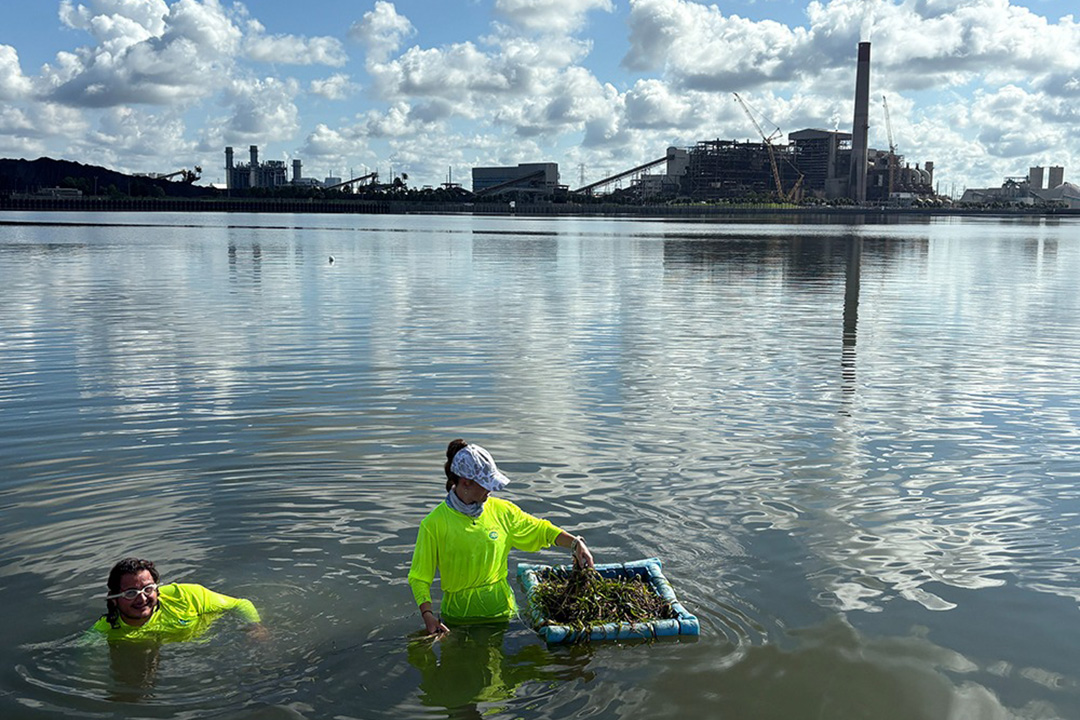
Zach Proctor, left, and Nicole Jackson from AquaTech Eco Consultants plant turtle grass in the waterways by Big Bend Power Station.
“If these two acres are successful, we will be planting another three acres of seagrass down the road. And hopefully it will be very effective,” said Tampa Electric’s Senior Manager of Land & Stewardship Programs Stan Kroh.
Manatees have long flocked to the warm waters near our power station, but the same heat that drew them in wasn’t as hospitable for seagrass. With Big Bend now producing less warm water after shifting away from coal, the conditions may finally allow seagrass – and the manatees’ favorite food – to flourish.
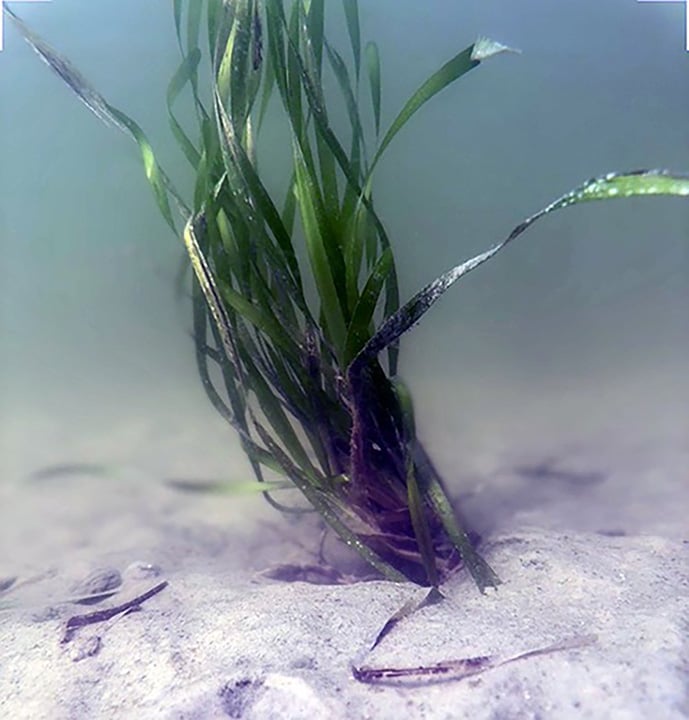
The turtle grass planted last month immediately looked right at home in the shallow waters.
A variety of seagrass species will be planted to see what thrives in the area. First on the menu are Thalassia testudinum, or turtle grass, and Halodule wrightii, also known as shoal grass. AquaTech owner Beau Williams said they can typically plant 4,800 plants per acre when spaced about three feet apart. If successful, they could also double up and add more plants with closer spacing until the desired coverage is achieved. The plants were sourced from Aquaticus Plants, a state certified aquaculture facility located in Hillsborough County.
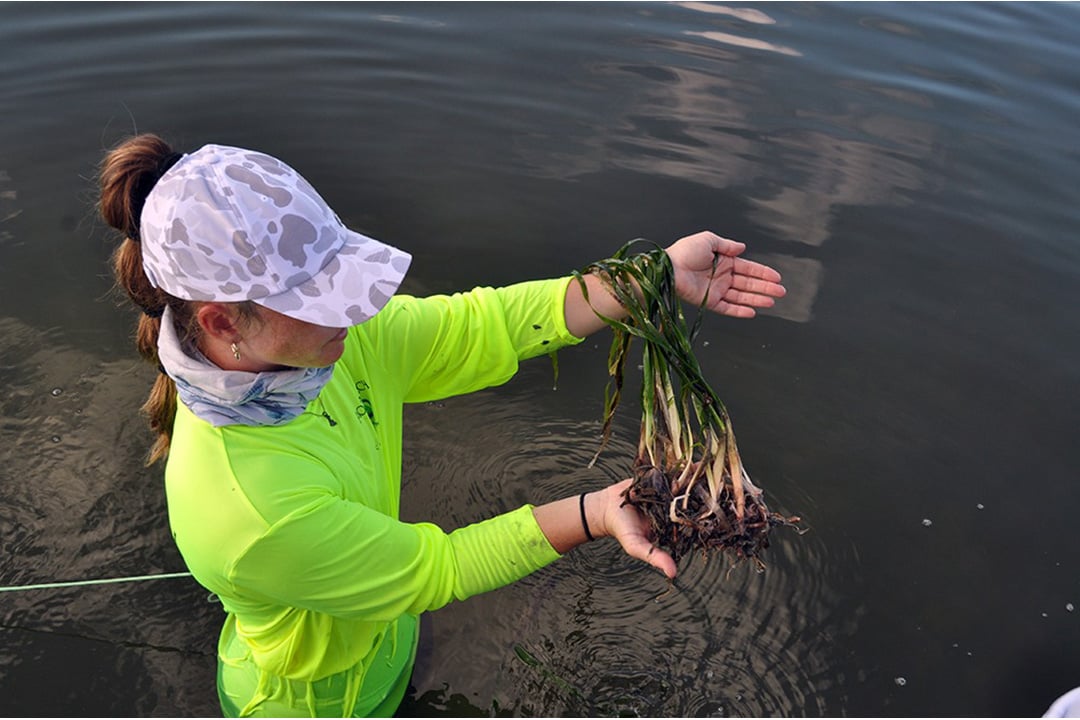
Nicole Jackson from AquaTech Eco Consultants shows off some of the turtle grass that was planted last month.
The AquaTech team will return in one to two months to check on the grass planted last week and add even more. If the plants prove to be viable, they will expand into the remaining three acres.
“If the blades fall off or are eaten, we'll be able to tell,” Beau said. “We'll swim the whole area and try to figure out what area did better or if we need to do something a little bit different. It's all trial and error.”
Even if the plants hold up well now, they will still have to withstand the upcoming manatee season. The MVC is known to see as many as 1,300 manatees in one day. If they discover this nice patch of seagrass just south of where they hang out, it may not last long.
“We have hope that it's going to survive,” Stan said. “Some species are more easily uprooted than others, but we’re planting species here that are more likely to remain rooted if manatees do feed on them.
“It's just like mowing your lawn. It'll grow back as long as the root system is still there.”
This project has been in the works for nearly four years, in large part thanks to Tom Ries of the Ecosphere Restoration Institute, who secured the grant funding to get it started.
On board to see the planting firsthand was State Rep. Michael Owen, District 70. A former board member of the Tampa Bay Estuary Program, he knows how important seagrass is to Tampa Bay. He even joined the team in the water to see the specimens and planting process up close.
“It's something that most folks here take for granted, but it's so important to our ecosystem. And I just wanted to see how the professionals get out here and get it done. I was really, really impressed,” Rep. Owen said.
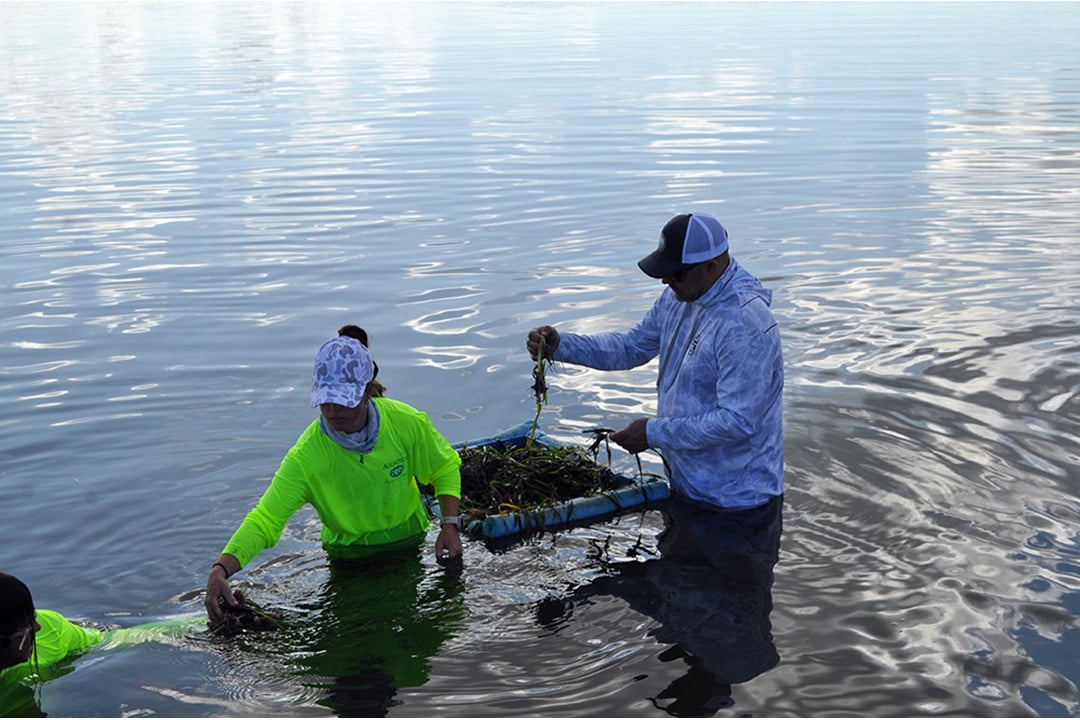
State Rep. Michael Owen, right, got to see the seagrass up close and helped group together some bulbs for planting.
Our award-winning MVC opens again Nov. 1 through April 15 at 6990 Dickman Road in Apollo Beach – and admission is completely free. In addition to being a cozy haven from the cold, the MVC is also a key location for the rescue and release of rehabilitated manatees, giving many of these beloved creatures a second chance in the wild. If this seagrass restoration project goes well, it will make the MVC an even more attractive site for manatees to rest and fuel up.
Updates on the seagrass restoration project will be shared in future posts, so keep an eye out!
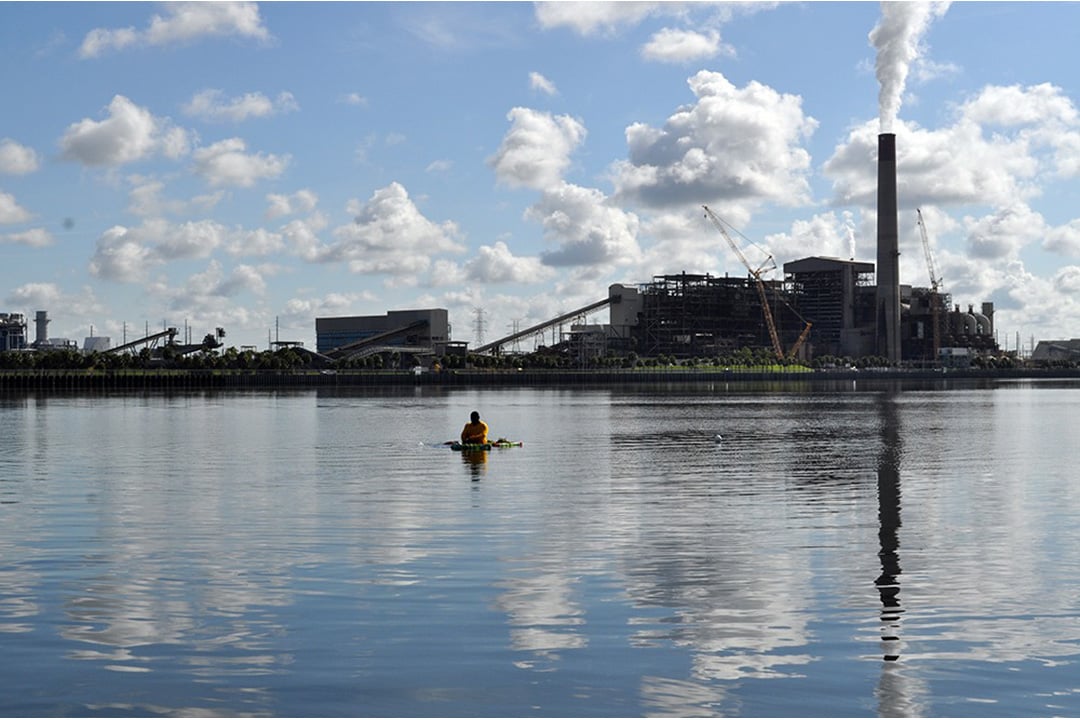
The seagrass restoration project could restore up to five acres of seagrass in the Big Bend waterway leading into the Manatee Viewing Center.